Cook / Culinary Arts • 2026 Admissions

Start Your Kitchen Career as a Professional Cook

Learn hot kitchen basics, prep & production, food safety & hygiene, basic baking, and plating with hands-on practice. Certificates (3–12 months) and diplomas (1–2 years) — some institutes align to NSQF/THSC job roles (e.g., Commis Chef) and may offer optional food-safety training.

Eligibility check doesn’t reduce your chances — it helps us route you to the right city & kitchen track.

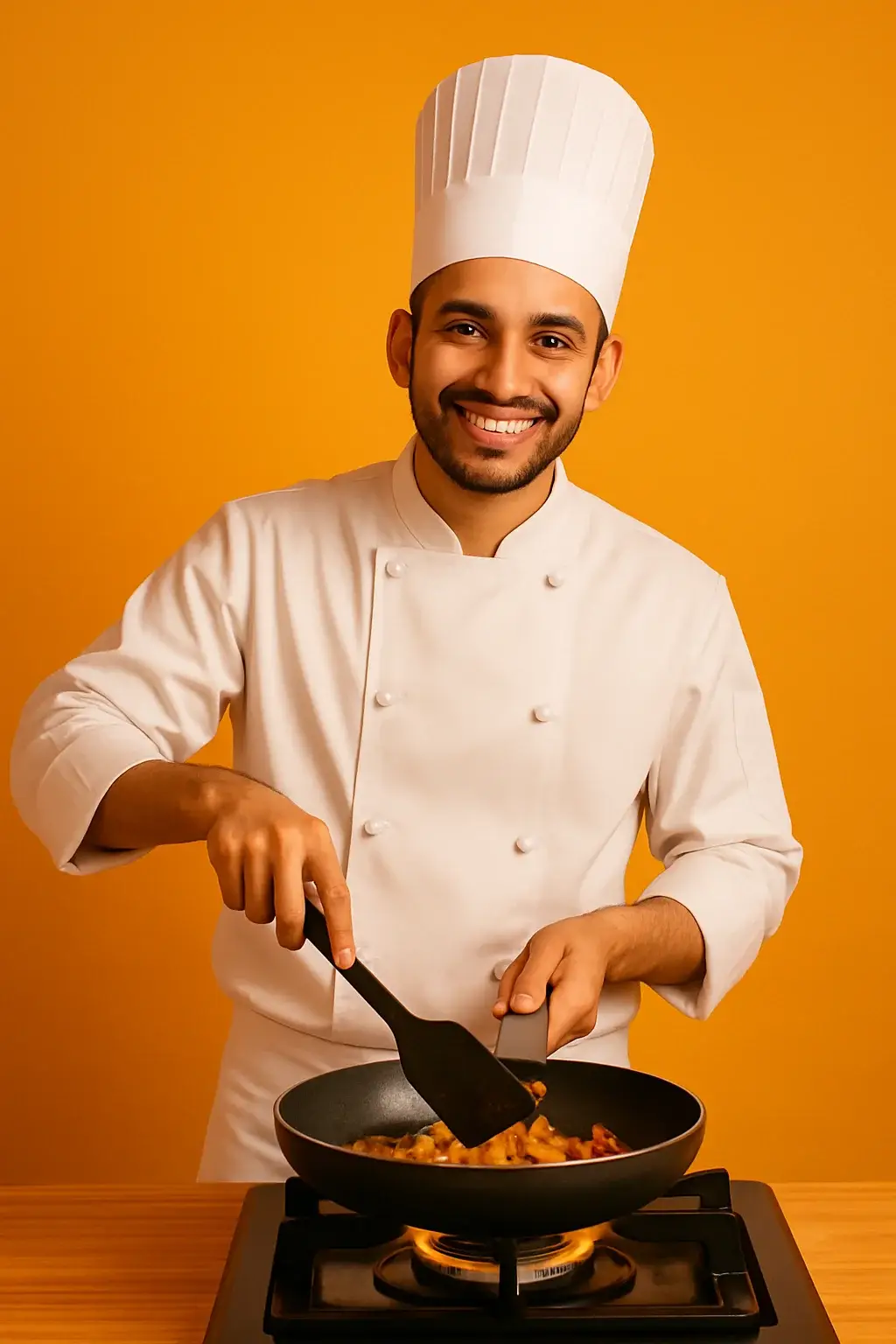
Chef sautéing food in a pan, orange background
Representative image

Why Choose a Career in Cook/Culinary Arts?

🔥
Year-round hiring

Hotels, restaurants, QSRs, catering, and cloud kitchens hire continuously.

🧼
Skill you can prove

Knife skills, hygiene, prep speed, consistency — practical skills matter most.

🍞
Multiple tracks

Hot kitchen, bakery/pastry, QSR production, and catering/volume cooking paths.

🚀
Growth & entrepreneurship

With experience: CDP/Sous Chef or start tiffin, cloud kitchen, bakery, catering.

Explore Cook / Culinary Courses by City

Can’t find your city? Talk to us — we’ll route you to the nearest partner kitchen.

Select a city to proceed

Pick a city under “Explore Cook / Culinary Courses by City”.

What is a Cook / Culinary Arts Course? (2026 Guide)

A Cook/Culinary Arts course is a vocational program that trains you for real kitchen work — from prep to service. Most entry roles care about speed, hygiene, consistency, and teamwork more than heavy theory.

Course Types & Duration

  • Short certificate: ~3–6 months (basics + practice)
  • Certificate (advanced): ~6–12 months
  • Diploma: ~1–2 years (stronger kitchen rotation + internship)

What You’ll Learn

  • Knife skills, prep, stocks/sauces, gravies, masalas
  • Kitchen safety, hygiene, storage & contamination control
  • Hot kitchen basics + basic bakery/pastry (program-dependent)
  • Production planning, portioning, wastage control

Typical Costs

  • Fees vary by city & brand (always verify current batch fees)
  • Extra: uniform, shoes, knife-kit, ingredients (ask for exact list)
  • Internship/OJT: confirm duration + stipend (if any)

Jobs After Course

  • Kitchen Trainee / Commis / Line Cook Trainee
  • Bakery Assistant / Pastry Assistant (if bakery track)
  • QSR kitchen crew → kitchen track growth
  • With experience: CDP → Sous Chef (longer ladder)
Reality check: kitchen roles involve long standing hours, heat, weekend/holiday shifts and fast pace. Placement support varies by institute — SkillKaJob does not promise guaranteed jobs.

Salary & Career Path — Cook / Culinary Arts (India, 2026)

Job Role Entry-Level Salary (₹/month) With Experience (₹/month) Typical Career Growth
Commis Chef / Kitchen Trainee ₹12,000 – ₹20,000 ₹20,000 – ₹32,000 Trainee/Commis → Demi Chef → Chef de Partie
Line Cook (Indian / Continental) ₹16,000 – ₹26,000 ₹26,000 – ₹40,000 Line Cook → Senior Cook → CDP (section)
Baker / Pastry Assistant ₹15,000 – ₹24,000 ₹24,000 – ₹45,000 Assistant → Pastry Chef → Head Baker
Chef de Partie (CDP) ₹25,000 – ₹40,000 ₹40,000 – ₹60,000 CDP → Sous Chef → Head Chef
Sous Chef / Kitchen Supervisor ₹35,000 – ₹60,000 ₹60,000 – ₹90,000+ Sous → Executive Sous → Executive Chef

Note: Ranges vary by city, property type (hotel/QSR/fine-dine/catering), service charge, overtime and shift allowances. Always confirm take-home salary + duty hours during interview.

Popular Culinary / Cook Institutes in India (Indicative Shortlist)
Starting points for research — verify current fees, intake, kitchens, OJT & placement terms. (Last checked: Dec 2025)
Institute City/State Flagship Program (example) Duration Accreditation / Affiliations (as published) What to verify before applying
NCHMCT / IHMs (e.g., IHM Pusa network)
Official Site
Pan-India Craft/Certificate programs in Food Production & Patisserie (varies by IHM) Varies NCHMCT Govt. hospitality education body Kitchen lab access, industrial training/OJT structure, exact eligibility & fees for your IHM.
Culinary Academy of India (CAI)
Official Page
Hyderabad, Telangana Certificate programs in Food Production & Patisserie ~18 months Private institute (verify current program recognition/affiliations on site) Hands-on hours/week, internship placement list, tool-kit/uniform cost, refund policy.
International Institute of Culinary Arts (IICA)
Official Site
New Delhi Professional / Advanced Diplomas (Culinary + Pastry options) Varies City & Guilds WACS Total fees inclusions (toolkit/uniform/exam fees), batch size, internship terms.
Indian Culinary Academy (ICA)
Official Site
Bengaluru, Karnataka Culinary Arts / Hospitality diplomas (track-based) Varies THSC (approved by NSDC — verify latest on site) Practical hours, kitchen infra, internship/OJT partners, and placement support scope (not guarantees).
IICCM – International Institute of Culinary Arts & Career Mgmt.
Official Site
Pune, Maharashtra Diploma in Culinary Arts / Advanced Diploma tracks Varies City & Guilds THSC Internship duration, recruiter list, written terms of “placement assistance”, fee breakup & cancellations.
Important: “Top/Best” is subjective. This is an indicative shortlist using publicly available institute pages. Always verify kitchens, hands-on hours, OJT, fee breakup, and placement terms before paying.

Course Completed? Get Hired.

Upload your résumé and we’ll connect you to higher-paying Commis/Cook, Bakery & Line Chef roles in hotels, restaurants, QSRs and cloud kitchens. Compare salaries before applying.

Culinary trainee in chef whites holding a résumé in a professional kitchen

FAQs — Cook / Culinary Arts (India, 2026)

Clear answers, no hype — so students choose the right track and partners get better-fit leads.

1What is the minimum eligibility for a cook/culinary course?
Most vocational programs accept 10th pass (some accept 8th/9th). Age rules vary by institute, but many kitchens prefer 18+ for full-time jobs. If you’re younger, you can still train — we’ll route you to suitable options.
2How long is the course — certificate vs diploma?
Common formats: 3–6 month short certificates, 6–12 month certificate/advanced tracks, and 1–2 year diplomas with deeper kitchen rotations and internships.
3What will I actually learn (practical skills)?
Expect knife skills, prep, safety, hygiene, storage, basic hot-kitchen production, standard recipes, portioning, and speed/consistency drills. Bakery/pastry basics may be included or offered as a separate track.
4Are bakery & pastry courses separate from “chef” courses?
Often yes. Hot-kitchen (culinary) and bakery/pastry use different equipment and practice routines. Some institutes offer a combined foundation, but specialization usually gives clearer job outcomes.
5Do institutes provide a knife-kit, uniform, and ingredients?
Many institutes charge extra (or include it in package). Before paying, ask for a written breakup for: uniform, shoes, knife-kit, lab ingredients, exam/cert fees, and refundable deposits (if any).
6Will I get a job after the course?
Institutes may offer placement support (interviews, referrals, internship conversion), but outcomes depend on attendance, practical performance, communication, and openings. SkillKaJob does not promise guaranteed placement.
7What is a realistic starting salary?
Entry roles commonly start around ₹12k–₹26k/month depending on city/property type, with upside via service charge, overtime and experience. Always confirm duty hours + take-home during interview.
8Are kitchen shifts difficult? What should I be prepared for?
Yes — long standing hours, heat, fast pace, weekends/holidays, and strict hygiene. If you’re unsure, pick a track (QSR or bakery) where routines can be more structured.
9Is internship/OJT included? Is it paid?
Many diplomas include OJT/internship. Stipend depends on property and city; some are unpaid. Ask: duration, shifts, weekly off, stipend, and whether hostel/meals are provided.
10Do I need English for kitchen jobs?
Basic English helps (menu terms, kitchen calls, hygiene instructions), but you can start with Hindi/regional language and improve on the job. We can route you to a training environment that matches your comfort level.
11How do I choose a good institute on SkillKaJob?
Prefer institutes with real kitchen labs (stoves/ovens/refrigeration), small batch size, clear hands-on hours, documented OJT partners, transparent fees/refunds, and honest placement support language.
12How does SkillKaJob use my data?
We collect only what’s needed to route you to relevant institutes. With consent, we may contact you on WhatsApp/call. You can request deletion anytime via Contact.

Trust note: We avoid “guaranteed job” promises. Always verify current fees, batch dates, kitchens, OJT and written placement terms before paying.
Scroll to Top